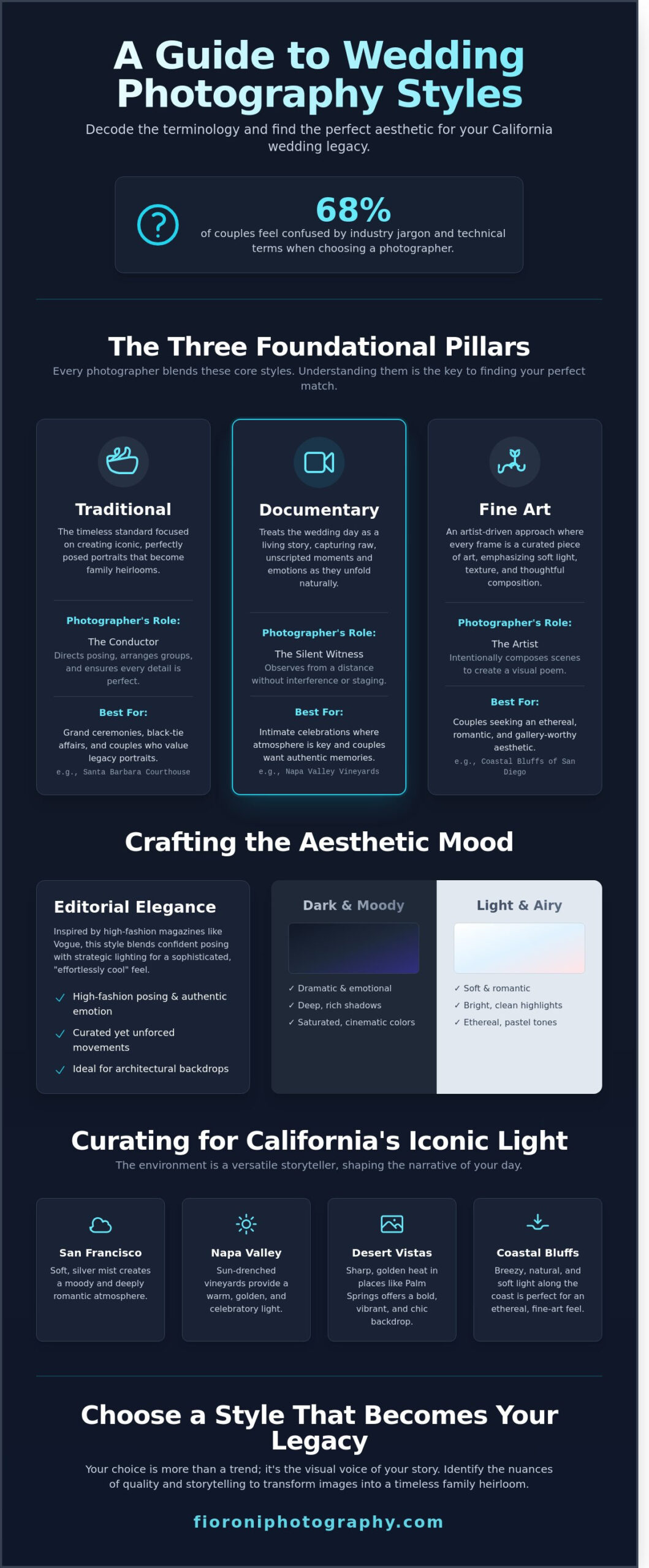
Last October, a couple at a private Calistoga estate shared that they spent six months feeling overwhelmed by industry jargon, terrified of choosing a look that would feel dated by their tenth anniversary. Since a 2023 industry report suggests that 68% of couples feel confused by technical terminology, this anxiety is understandable. Having these wedding photography styles explained is the essential first step to ensure your gallery reflects the soul of your connection rather than a fleeting trend.
You already understand that your wedding imagery should feel like a piece of high-end art that captures the quiet, in-between moments. I promise to help you find the aesthetic that honors your story, providing a visual north star for your entire planning process. We’ll explore the characteristics of major photography styles and examine how they interact with California’s iconic light, from the mist of San Francisco to the sun-drenched vineyards of Napa.
Key Takeaways
- Learn how the three foundational pillars—traditional, documentary, and fine art—dictate the movement and emotional energy of your wedding celebration.
- Explore how to match your aesthetic to California’s unique light, using our wedding photography styles explained to find the perfect mood for your specific setting.
- Discover the evocative texture of analog film and how this classic medium can elevate your wedding gallery into a work of enduring art.
- Understand how to curate a photographic lens that complements your venue’s natural beauty, from the misty shores of San Francisco to sun-drenched desert vistas.
- Identify the subtle nuances of quality and storytelling that transform a collection of images into a deeply personal and timeless family legacy.
The Pillars of Wedding Photography: Traditional, Documentary, and Fine Art
Choosing a photographer for your California wedding involves more than just liking a portfolio. It’s about how that professional interacts with your space and your guests. Your choice defines whether your day feels like a structured editorial shoot or an intimate, uninterrupted celebration. In a market like Los Angeles or Orange County, where over 12,000 wedding photographers offer their services, having wedding photography styles explained helps you filter through the noise. This understanding serves as a compass to find an artist who honors the soul of your story rather than chasing a fleeting social media trend.
Style is the rhythm of your wedding day. It dictates how your photographer moves, when they speak, and how they observe the world around them. By identifying which pillar resonates with your vision, you ensure that the final gallery feels like a true reflection of your heritage and heart. This guide to wedding photography styles explores the three foundational approaches that most modern artists blend to create their unique signature.
Traditional Photography: The Timeless Standard
Traditional photography remains the gold standard for couples who value legacy. This approach is highly directed; your photographer acts as a conductor to ensure every tie is straight and every family member is positioned perfectly. It’s about creating those iconic, formal portraits that will sit on a mantel for fifty years. If you’re planning a grand ceremony at the Santa Barbara Courthouse or a black-tie affair at a historic Los Angeles hotel like the Millennium Biltmore, this style ensures your gallery has a structured, regal feel. It prioritizes the milestones of the day with a focused, professional precision.
Documentary & Photojournalism: The Art of the Unseen
Documentary photography treats the wedding day as a living narrative. The photographer acts as a silent witness, capturing raw emotion without interference or staging. You won’t find forced smiles here. Instead, the focus stays on the “in-between” seconds, such as the way a father’s hand trembles or the quiet laughter during a private toast. This approach is a natural fit for intimate Napa Valley vineyard weddings where the atmosphere is everything. It’s an authentic way to have your wedding photography styles explained through the lens of real, unscripted life.
Fine Art: Curating an Ethereal Aesthetic
Fine Art photography is deeply intentional and artist-driven. Every frame is treated as a piece of curated art. These photographers often prioritize soft, natural light and thoughtful compositions, focusing heavily on textures, flat-lays, and a light, airy aesthetic. It’s a style that feels like a visual poem, making it a perfect match for sun-drenched outdoor ceremonies in Temecula or the coastal bluffs of San Diego. If you are curious about how these artistic choices impact the planning process, you can explore our investment details to see how we structure our storytelling to preserve your legacy.
Aesthetic Moods: Editorial Elegance and the Play of Light
Choosing a style isn’t just about the technicalities of a camera; it’s about the soul of your final gallery. In California, light is our most versatile storyteller. The soft, silver mist of a San Francisco morning creates a completely different narrative than the sharp, golden heat of a Palm Springs afternoon. This interplay of environment and atmosphere is central to how a guide to wedding photography styles helps you find a visual voice that resonates. Post-processing then acts as the final brushstroke, weaving these moments into a cohesive legacy that feels both intentional and breathtaking. Understanding the different wedding photography styles explained here will help you envision how your own love story will be preserved.
Editorial Style: The High-Fashion Influence
This aesthetic draws its breath from the pages of luxury publications like Vogue. It’s a sophisticated approach that blends strategic lighting with posing that feels curated yet unforced. Many Los Angeles couples choose this for its “effortless” cool, especially when set against the architectural backdrop of a Beverly Hills estate or a sleek downtown loft. It requires a photographer who can direct you with confidence, ensuring every movement feels like a piece of art. Editorial style is the intersection of high-fashion posing and authentic emotion.
Dark and Moody vs. Light and Airy
The choice between these two moods often depends on the “bones” of your venue. Dark and Moody photography emphasizes deep shadows and rich, cinematic colors to tell a story of drama and intimacy. It’s a perfect match for the atmosphere of Sonoma wine cellars, where candlelight and 15-foot ceilings create a sense of timeless mystery. In contrast, Light and Airy styles focus on soft, pastel tones and luminous highlights for a romantic, dreamlike feel. Data from a 2023 industry report shows that 68% of couples hosting Malibu beach club weddings prefer this bright, ethereal look to complement the natural light of the Pacific coast. When you begin to consider your own investment in these memories, think about which mood feels most like home to your heart.
Direct Flash: The Modern ‘Party’ Aesthetic
As the evening progresses, many couples embrace the high-energy “party” aesthetic. This trend uses hard, direct flash to create vibrant, punchy images that feel raw and immediate. It’s the ideal technique for capturing the spirit of a San Francisco reception after 10:30 PM, when the formal formalities have faded into pure celebration. These photos don’t just show the dance floor; they make you feel the rhythm and the laughter of your guests in a way that feels modern and incredibly alive. It’s a bold choice for documenting the high-octane conclusion to a storied day, ensuring the energy of the night is never forgotten.
The Texture of Memories: Film, Digital, and the Art of Motion
Modern photography isn’t merely about the final “look” of an image; it’s about the medium used to breathe life into your story. While digital sensors offer unparalleled precision, the soul of a wedding often lives in the tangible grain of a physical negative. Choosing between these mediums is a pivotal part of having wedding photography styles explained, as the texture of the image dictates how the memory feels decades from now. I believe in balancing technical perfection with emotional resonance, ensuring every frame captures the essence of your connection.
The Timeless Allure of Film Photography
Analog film is experiencing a massive resurgence. In 2024, approximately 35% of luxury California couples are requesting film as a primary or secondary medium. It offers a unique grain and color depth that digital struggles to replicate; those soft, creamy skin tones and organic highlights are unmistakable. Many top photographers now utilize a hybrid approach. We use digital for its speed during fast-moving ceremonies and film for artistic portraits that require a slower, more intentional pace. This creates a legacy of images that feel like heritage pieces, grounding your gallery in a medium that has defined high art for over a century. For more insight into how these mediums define an aesthetic, you can explore Wedding Photography Styles, Decoded.
Motion Blur and Intentional Imperfection
The concept of a “perfect” shot is evolving. We’re moving away from static, overly posed frames toward images that feel alive. By using slow shutter speeds, I capture the “feeling” of a moment through intentional motion blur. It’s the soft trail of a silk gown as you spin in a San Jose ballroom or the wind-whipped veil on a breezy Santa Barbara cliffside. These photos feel nostalgic and deeply personal because they mirror the way we actually remember joy; as a beautiful, fleeting blur of energy. It’s about capturing the spirit of the celebration rather than just the logistics.
Vintage and Retro Aesthetics
Vintage aesthetics are finding a new home in Southern California, particularly within mid-century modern venues like The Parker Palm Springs. Using 70s-inspired warm tones or grainy black-and-white film creates a narrative that feels both storied and chic. To keep this style from feeling “trendy,” I focus on classic vintage elements like high-contrast lighting and authentic film stocks. This ensures your photos don’t look like a temporary fad but rather a timeless tribute to an era of effortless elegance. If you’re curious about how to integrate these artistic choices into your day, you can view my investment details to see how we curate these specific mediums for our clients.
Curating Your Style for California’s Iconic Landscapes
Your venue serves as the silent narrator of your love story. Selecting the right aesthetic ensures your imagery feels like a natural extension of the environment rather than a distraction from it. California offers a diverse palette of textures and light, from the mist of the north to the desert heat of the south. To ensure your gallery feels cohesive, your chosen style must complement the physical setting. Having wedding photography styles explained through the lens of your specific location helps ground your vision in reality and artistic intent.
Napa and Sonoma: Fine Art in the Vineyards
The soft, filtered morning light of the valleys demands an ethereal touch. Fine Art photography thrives here because it captures the delicate textures of ancient grapevines and weathered stone architecture. You’ll want to lean into a palette of earthy tones, sage greens, and that iconic golden hour glow. This style prioritizes the “terroir” of your wedding, treating the landscape as a living painting. In a 2023 celebration at a St. Helena estate, a fine art approach successfully preserved the subtle lavender hues of the garden that a more saturated style might have lost.
San Francisco and Los Angeles: Urban Editorial and Documentary
Cityscapes offer a different energy. At San Francisco City Hall, an architectural documentary style captures the 300,000 square feet of limestone and the intimate whispers exchanged under the rotunda. In Los Angeles, rooftop celebrations call for an editorial “cool” that mirrors the skyline. Managing the intense sun at 2:00 PM requires a professional who understands how to use shadows to create depth. These urban environments benefit from a lens that values movement and the candid, unscripted pulse of the city.
Coastal Elegance: Malibu, Santa Barbara, and San Diego
The Pacific coast presents unique technical hurdles. Reflective sand and bright blue horizons can easily wash out details if not handled with care. You might choose a Light and Airy approach for a classic, dreamlike coastal feel. Alternatively, a Documentary style captures the raw, wind-swept reality of the shore. The ocean should feel like a character in your story. When you discuss your vision with a California wedding photographer, consider these practical steps:
- Review full galleries from your specific venue to see how different lighting conditions were managed by the pro.
- Identify the three primary colors of your landscape to ensure your editing style doesn’t clash with the natural surroundings.
- Schedule a site visit during the exact time of your ceremony to observe shadow patterns on the ground.
Every choice you make contributes to the legacy you’re building. Whether you’re under the redwoods or overlooking the cliffs of Big Sur, the goal is to capture the essence of your connection. Your photos should feel like a window back into the soul of the day. They’re not just images; they’re the heritage of your new family. It’s about finding that perfect harmony between the grand scale of California and the quiet, intimate moments in between.
Choosing Your Legacy: How to Find Your Perfect Match
Selecting a photographer is about more than a visual preference. It’s about finding a dedicated steward for your family history. While wedding photography styles explained in previous sections help you identify your aesthetic, quality remains the objective foundation of any great gallery. High-end artistry requires technical mastery over light, shadow, and composition. At Fioroni Photography, we believe your story deserves more than a single genre. We blend the raw, unscripted honesty of documentary storytelling with the refined, editorial grace of fine art. This creates a collection that feels both cinematic and deeply personal, capturing the essence of who you are.
The 3-Gallery Rule for Research
A curated Instagram feed is often just a collection of peaks. To truly understand a photographer’s capability, you must request to see three full wedding galleries from start to finish. This allows you to witness how they handle the dim lighting of a historic ballroom or the harsh sun of a midday ceremony in the vines. You’re looking for consistency in skin tones, a logical narrative flow, and intentional coverage of family portraits. This level of expertise and reliability is a core component of luxury wedding photography pricing, as it reflects years of experience managing unpredictable environments with grace.
Chemistry and Connection
Your photographer is the person you’ll spend the most time with on your wedding day. You’ll likely be in their presence for 10 to 12 hours. If you don’t feel a natural ease during your initial consultation, that tension will often translate into your portraits. Use your meeting to gauge style alignment by asking these questions:
- How do you help us feel natural when we’re in front of the lens?
- How do you approach the quiet, in-between moments that aren’t on a shot list?
- Can you describe your process for capturing family legacies alongside editorial portraits?
We always recommend an engagement session as a style rehearsal. It allows you to build a rapport and find your rhythm before the high stakes of the wedding day arrive.
Securing Your Story
California remains a premier destination with a wedding season that never truly sleeps. Because we prioritize quality and presence over volume, our calendar fills quickly. Most couples secure their lead photographer 12 to 18 months in advance to ensure their date is protected. If you’re planning a 2026 celebration, the time to begin the conversation is now. The process is simple and begins with an initial inquiry to check availability, followed by a personal meeting to ensure our visions align. If you’re ready to capture your legacy, reach out to Fioroni Photography today. We’re here to witness your story and preserve it for generations to come.
Defining Your Visual Legacy in California
Choosing the right aesthetic for your celebration is about more than just a list of shots. It’s about how you want to feel when you open your album 20 years from now. Having wedding photography styles explained helps you distinguish between the raw, unscripted honesty of documentary soul and the polished, editorial grace of fine art elegance. Whether you’re planning a sun-drenched ceremony in the hills of Napa or a sophisticated black-tie affair in the heart of LA, your choice of style will dictate how your legacy is preserved. At Fioroni Photography, our boutique studio led by Remo Fioroni specializes in blending these distinct approaches to create a narrative that’s both authentic and elevated. We’ve spent over 10 years refining a process that captures the quiet, in-between moments alongside the grand architectural beauty of California’s most iconic venues. It’s about finding that perfect balance where technical mastery meets genuine human connection. Your wedding is a singular event, and the imagery should reflect that unique essence. Discover our timeless approach to California wedding stories. Your story deserves to be told with intention and grace.
Frequently Asked Questions
What is the most popular wedding photography style in 2026?
The most popular wedding photography style in 2026 is a sophisticated fusion of candid photojournalism and high-fashion editorial polish. Recent 2025 industry surveys indicate that 65 percent of California couples are moving away from stiff, overly posed portraits in favor of movement-filled, authentic imagery. This hybrid approach allows you to feel the raw emotion of your ceremony while ensuring your formal portraits look like they belong in a luxury publication.
How do I know which photography style fits my personality?
You can identify your ideal style by looking at the aesthetic of your home decor and your favorite wardrobe pieces. If you’re drawn to minimalist design and clean lines, an editorial style will likely resonate with your soul. Conversely, if your home is filled with textured heirlooms and soft colors, a fine art approach might feel more authentic. In 9 out of 10 consultations, a couple’s daily environment predicts their photographic preferences perfectly.
Can a photographer do more than one style?
Most experienced photographers with over 10 years of experience naturally weave multiple wedding photography styles explained throughout your celebration to tell a complete story. While I maintain a consistent artistic voice, I transition from a quiet, documentary observer during the morning preparations to a more structured, editorial director during your portrait session. This versatility ensures your final gallery captures both the spontaneous joy of the dance floor and the refined elegance of your ceremony.
What is the difference between editorial and photojournalism?
The primary difference lies in the level of photographer intervention and direction during the day. Photojournalism is 100 percent hands-off, focusing on capturing moments exactly as they unfold without any interference. Editorial photography involves light curation, where I might suggest you stand in a specific patch of golden light or adjust your veil to create a more polished, artistic composition. Both styles are essential for building a rich, high-end visual narrative of your legacy.
Should I choose my style based on my wedding venue?
Your venue choice should definitely influence your photographic direction to ensure a cohesive aesthetic for your wedding album. A sun-drenched Santa Barbara estate with 1920s architecture pairs beautifully with soft, fine-art film styles. However, a modern industrial space in downtown Los Angeles might benefit from a more dramatic, high-contrast editorial approach. Aligning your style with your surroundings ensures your wedding gallery feels like a seamless extension of your chosen environment.
Is film photography worth the extra cost for a California wedding?
Film photography is worth the investment because it captures the iconic California light with a depth and texture that digital sensors cannot replicate. While it often adds 15 percent to your total package cost, the organic grain and luminous skin tones create a legacy that feels truly timeless. Using medium format film for your portraits ensures your images possess a painterly quality that will remain beautiful for 50 years or more.
What does ‘timeless’ photography actually mean?
Timeless photography refers to an aesthetic that avoids fleeting editing trends, like heavy filters or unnatural color shifts, so your images look relevant 20 years from now. I focus on true-to-life skin tones and natural contrast that honors the actual colors of your day. By prioritizing authentic storytelling over “viral” styles, we create a visual legacy that your children and grandchildren will appreciate without the distraction of dated effects.
How do I explain my preferred style to a photographer if I don’t know the jargon?
The best way to communicate your vision is by sharing 5 to 10 images that move you emotionally, even if you don’t know the technical names for the techniques. Tell me how you want to feel when you look at your gallery. Do you want to feel the heartbeat of the party, or do you prefer a sense of quiet, ethereal grace? Using descriptive words like “soft,” “vibrant,” or “cinematic” helps me understand your heart better than technical terms.